
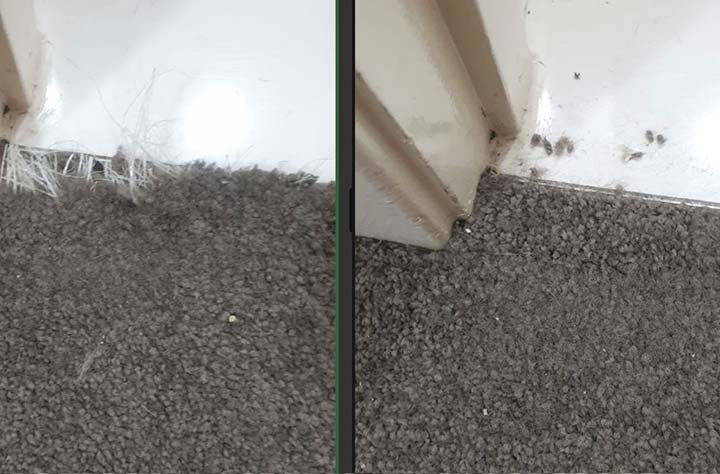
Yes, carpet stretching is the standard and most effective method for removing wrinkles, ripples, and buckling from wall-to-wall carpet. When done correctly by a professional using a power stretcher, the carpet is pulled tight, re-secured to the tack strips along the walls, and the excess material is trimmed away. The result is a flat, smooth floor that looks like new.
If you have noticed waves forming in a hallway or ripples spreading across your living room, you are not alone. This is one of the most common carpet issues homeowners face. The good news is that stretching fixes the problem permanently when the underlying cause is addressed. The bad news is that doing it properly requires a tool most homeowners do not own. Let's walk through what carpet stretching actually involves, why wrinkles happen, what it costs, and when you should and should not attempt it yourself.
Why Your Carpet Wrinkles in the First Place
Understanding the cause matters because stretching only fixes the symptom. If you do not address what caused the wrinkling, the ripples will return.
Humidity and Temperature Changes
Carpet expands and contracts with changes in moisture and temperature. This is especially true in regions with humid summers and dry winters. The Carpet and Rug Institute notes that indoor relative humidity should be maintained between 30% and 65% to minimize dimensional changes in carpet. When humidity spikes, carpet fibers absorb moisture from the air and swell. The latex backing can also expand. If the installation did not leave enough room for this movement, the carpet buckles.
Improper Installation
The most common installation error is failure to use a power stretcher. Some installers use a knee kicker alone. A knee kicker is a small tool that lets the installer bump the carpet onto the tack strip with their knee. It works for small areas like closets but cannot generate enough tension for a full room. Carpet installed only with a knee kicker will eventually loosen and wrinkle. This is not a maybe. It is a when.
According to industry installation standards set by the Carpet and Rug Institute, specifically CRI 104 and CRI 105, power stretching is required for all stretch-in carpet installations. A knee kicker is approved only for areas under 100 square feet and must still be followed by power stretching in the main field.
Heavy Furniture Dragging
Dragging heavy furniture across carpet stretches the backing and breaks the bond between the carpet and the tack strip. Once the carpet loosens along one wall, the slack migrates across the floor. Within weeks or months, you see ripples forming.
Delamination
Carpet backing is made of two layers with a latex adhesive between them. When that adhesive fails, the primary and secondary backings separate. This is called delamination. The carpet loses its structural integrity and cannot hold tension. Stretching will not fix delaminated carpet. We will cover how to test for this later.
Age and Wear
Even perfectly installed carpet will eventually loosen over 10 to 20 years. The latex backing loses flexibility. Traffic slowly works the carpet loose from the tack strip. This is normal aging, not a defect.
What Happens During a Professional Carpet Stretch
Knowing the process helps you evaluate whether a contractor is doing the job correctly. Here is what a proper carpet stretching service looks like.
Room Preparation
The technician removes all furniture from the room. Some companies offer to move furniture for an additional fee. Others require the room to be empty upon arrival. Clarify this before booking.
Carpet Release
The carpet is pulled off the tack strip along one or more walls. Usually the technician starts at the wall opposite the wrinkles. In severe cases, they may need to release three sides of the room.
Power Stretching
The power stretcher has a head that grips the carpet, a long pole, and a lever mechanism that generates hundreds of pounds of tension. The technician braces the pole against the opposite wall and uses the lever to stretch the carpet tight. This is repeated across the room in sections. Each stretch pulls the slack out of the carpet.
Re-securing and Trimming
Once tension is restored, the carpet is hooked back onto the tack strips along the walls. The excess carpet that now hangs over the edges is trimmed away with a wall trimmer or a sharp utility knife. The carpet is tucked into the gap between the tack strip and the wall using a stair tool or putty knife.
Door Trimming
If the stretching pulls the carpet higher, the technician may need to undercut door jambs or shave the bottom of doors so they swing freely. This is a normal part of the process.
Professional Carpet Stretching Costs
Carpet stretching costs vary by region, room size, and the severity of the wrinkles. Here is what you should expect.
| Factor | Typical Range |
|---|---|
| Per room (basic, 150-200 sq ft) | $80 to $150 |
| Per square foot | $0.30 to $0.60 |
| Whole house (3-4 rooms) | $300 to $600 |
| Furniture moving fee | $50 to $100 additional |
| Minimum service charge | $75 to $125 |
| Repairs (tack strip replacement, seam repair) | $2 to $5 per linear foot |
These prices are based on 2024 national averages gathered from home service platforms like HomeAdvisor and Angi, as well as published pricing from regional carpet service companies.
Most companies charge a minimum just to show up. If you have only one small bedroom with minor ripples, expect to pay the minimum service charge, not the per-room rate.
Can You Stretch Carpet Yourself?
Technically yes. Practically, it depends on your tolerance for risk and your access to tools.
The Knee Kicker Problem
A knee kicker costs $30 to $50 to rent or buy. It is tempting to use one and call it done. Do not make this mistake. A knee kicker does not generate enough sustained tension. You will push the slack to the other side of the room. The wrinkles will return within months. You are also risking injury to your knee if you kick that thing for an hour.
Power Stretcher Rental
Power stretchers are available at some tool rental stores for $30 to $50 per day. The tool itself is simple to operate. The challenge is technique. You must know which walls to release, how much tension to apply, and how to work sequentially across the room without creating new problems.
If you are determined to do this yourself, rent a power stretcher, not a knee kicker. Watch several videos from carpet manufacturers, not just general DIY channels. Follow the CRI 104 installation standard as your guide. Understand that you can tear the carpet if you overstretch it or rip the backing if you stretch against a seam.
When DIY Makes Sense
DIY stretching can work in a small bedroom or home office where the wrinkles are minor and you can take your time. You need the power stretcher, a knee kicker for the finishing edges, a wall trimmer, a stair tool, and knee pads. Your total tool investment for a rental will be around $80 to $120. The risk is medium. The cost savings over a pro is maybe $50 to $70. For most homeowners, the savings do not justify the learning curve and the potential for damage.
How to Test Whether Your Carpet Can Be Stretched
Not all wrinkled carpet is a candidate for stretching. Perform these two tests before you call anyone.
The Delamination Test
Find a wrinkle and pinch the carpet on both sides of the ripple. Try to fold the carpet along the peak of the wrinkle. Look at the backing. If you see the secondary backing separating from the primary backing, like a peeling sticker, your carpet is delaminating. Stretching will tear it. The only fix for delaminated carpet is replacement.
The Tack Strip Test
Walk to a corner of the room. Gently try to lift the carpet edge with your fingers. If it comes up easily with no resistance, the tack strips may be failing. Wooden tack strips can rot or break. If the pins are rusted or the wood crumbles, stretching will not work because there is nothing solid to grip the carpet. Tack strip replacement adds cost but is straightforward for a professional.
What to Do Before the Technician Arrives
A few simple preparations save you money and improve the outcome.
- Vacuum the carpet. The technician needs clean carpet to grip with the stretcher head.
- Empty the room. Remove all furniture, lamps, and small items. If you need the company to move furniture, confirm this when booking.
- Check your doors. Determine which doors might stick after the carpet is tighter. Tell the technician so they are prepared.
- Secure pets. The stretching process is loud. The power stretcher makes a sharp noise with each engagement. Keep animals in a separate room.
- Take before photos. This protects you and the contractor. Document the wrinkles before work begins.
Common Mistakes That Make Wrinkles Return
Even after professional stretching, wrinkles can return if the root cause is ignored. Here is what undermines a good stretch.
Ignoring Humidity Control
If your carpet wrinkled because of seasonal humidity swings and you do nothing to manage indoor humidity, it will wrinkle again. Install a hygrometer for $10. If your indoor humidity consistently exceeds 65% in summer, run a dehumidifier. This is especially important for homes on crawlspaces without vapor barriers. Moisture rising through the subfloor is a primary cause of carpet buckling.
Not Replacing Failed Padding
Carpet padding that has compressed, deteriorated, or absorbed moisture cannot support the carpet properly. If the technician stretches over bad padding, the carpet may still appear loose. Ask the technician to inspect the padding when the carpet is lifted. Replacing padding in a standard room adds $1 to $3 per square foot but extends carpet life and improves comfort.
Stretching Carpet That Is Too Old
Carpet that is 15 to 20 years old often has brittle backing. Stretching can cause the backing to crack or tear. The technician should assess this when they pull up a corner. Be prepared for the possibility that replacement is the only viable option. A reputable technician will tell you this before they start, not after they tear your carpet.
When Stretching Will Not Work
Carpet stretching is not a universal fix. Here are the situations where you need a different solution.
- Delaminated backing. As described above. Replacement only.
- Burned, torn, or missing sections. Stretching does not fix holes. You need a patch or replacement.
- Carpet that has shrunk. This is the opposite problem. If the carpet has shrunk and pulled away from the walls, stretching may tear it. Shrinkage is rare but can happen after improper wet cleaning.
- Wrinkles caused by a shifting subfloor. If your subfloor is moving due to foundation issues, the carpet is the symptom, not the problem. Fix the foundation first.
How to Find a Qualified Carpet Stretching Professional
Not everyone with a truck and a knee kicker is a professional. Here is how you vet a carpet repair technician.
Ask if they use a power stretcher. If they say no or say a knee kicker is sufficient, call someone else. This is your single most important filter.
Check for CRI certification. The Carpet and Rug Institute offers installer certification programs. Certified installers have demonstrated knowledge of industry standards. Ask if they are CRI-certified or have IICRC (Institute of Inspection, Cleaning and Restoration Certification) credentials.
Read reviews that mention stretching specifically. General carpet installation reviews are less relevant. Search for "carpet stretching" in the company's reviews.
Get a written quote. The quote should include room dimensions, total price, what is included, and what is extra. Avoid verbal estimates with no documentation.
Ask about guarantees. A reputable company will guarantee their stretching work for at least one year. Workmanship warranties longer than that are a good sign.
Frequently Asked Questions
How long does carpet stretching take?
A single room with moderate wrinkles takes a professional 30 minutes to an hour. A whole house with multiple rooms takes 2 to 4 hours. Furniture moving adds time.
Will stretching damage my baseboards?
Properly done, stretching should not damage baseboards. The power stretcher braces against the wall with a wide head designed to distribute force. Some technicians use a protective board. Minor scuffs are possible but unusual. If your baseboards are fragile antique wood, mention this beforehand so the technician can take extra care.
Do I need to replace the tack strips?
Not usually. Tack strips last for decades unless they have been exposed to moisture. If the technician finds broken or rusted strips while the carpet is up, replacing them is a minor additional charge and well worth it.
Can stretching fix wrinkles on stairs?
Stair carpet is installed differently than room carpet. Each tread is typically secured individually. Wrinkling on stairs usually means the carpet has loosened on the tread and needs to be re-kicked or re-fastened. A power stretcher is not used on stairs. The process is more manual and detailed. Expect to pay more per stair than per square foot of flat carpet.
Will the carpet look stretched or thinner?
No. Carpet is designed to be installed under tension. Proper stretching restores the carpet to its intended dimensions. It should not look thinner or distorted. If it does, the technician overstretched it, which is difficult to do with a power stretcher on most residential carpet.
How soon after stretching can I put furniture back?
You can return furniture immediately after the stretching is complete. There is no cure time. The carpet is mechanically secured to the tack strips and is ready for use.
Is carpet stretching covered by home insurance?
Generally not. Carpet wrinkles are considered a maintenance or installation issue, not sudden accidental damage. If the wrinkling was caused by a covered peril like a burst pipe that warped the subfloor, your policy may cover carpet replacement as part of the water damage claim. Check your policy.
Can new carpet develop wrinkles?
Yes. New carpet that wrinkles within the first year almost always indicates improper installation. Most reputable installers warranty their work for at least one year. Call the company that installed it. They should return and re-stretch at no charge. Document the wrinkles as soon as they appear.
Key Takeaways
Carpet stretching is the correct fix for wrinkled carpet when the backing is intact and the subfloor is stable. The process works by pulling the carpet tight and re-securing it, removing the slack that forms the visible ripples. A power stretcher is essential. Knee kickers alone cause more problems than they solve.
Most homeowners should hire a professional. The cost of $80 to $150 per room is reasonable compared to the price of a new carpet installation at $3 to $7 per square foot. The key factors that determine success are the condition of the backing, the quality of the tack strips, and the technician's skill.
Before you book anyone, test for delamination. Check your humidity levels. Vacuum the room and clear the furniture. Ask the technician whether they use a power stretcher. If you hear "knee kicker," keep dialing.
Carpet that is structurally sound can be stretched and look flat and tight again. The fix is not complicated, but it requires the right tool and the right hands. Now you know what to look for and what to ask.